Milam County Historical Commission
Milam County, Texas
Milam County, Texas




All articles from the Temple Daily Telegram are published with the permission of the
Temple Daily Telegram.
All credit for this article goes to
Jeanne Williams and the Temple Daily Telegram
Photos by Shirley Williams -
Temple Daily Telegram photographer
Temple Daily Telegram.
All credit for this article goes to
Jeanne Williams and the Temple Daily Telegram
Photos by Shirley Williams -
Temple Daily Telegram photographer
Milano's roots start with the railroad
by Jeanne Williams
Temple Daily Telegram
Published: August 31, 2009
MILANO - Milano is one of the many steel rail cities
platted and named by railroads in the 19th century.
But what distinguishes this Milam County town from its
trackside kinfolk is that in a matter of seven years,
this town experienced two railroad births and three names.
Originally christened Milam City when the International &
Great Northern Railroad arrived in 1873, the hand-written
application for a post office was either poorly scribbled
or misread, Basil McGregor's 1965 The History of Milano stated. When the approved
documents arrived, the post office was approved for the town of Milano. Aside from
two monikers on records, the second township platted by the Gulf, Colorado and
Santa Fe Railway, also was named briefly Temple in honor of Bernard Moore Temple,
GC&SF chief construction engineer before his surname was bestowed upon a new city
near Belton in Bell County.
No one really takes seriously the tale that Milano was named by a pioneer family.
According to a widely circulated story, the settlers stopped their wagon at the
site that eventually became Milano. The husband asked the wife if she wanted to
settle here. Looking around at the post oaks, deep sand, red clay outcroppings and
brush, she declared "My, land. No." Hence, the name Milano. The Handbook of Texas
Online stated that one story suggests that the town was named for Milano, Italy,
because of the similarity of the climates. It also offers that the postal
authorities declined to call the town Milam City because a Milam already existed in
Texas, the Handbook stated.
The original railroad town was platted on the south side of the railroad tracks
about 1½ miles west of the current location when the I&GN laid track across the
Brazos River 30 miles from Hearne to Rockdale. There were stories, however, that an
unnamed settlement existed in this area beside a spring-fed watering hole on a
trail used by wagon traffic and cattle drives that cut through southwest to
Caldwell before the railroad was surveyed, McGregor's book stated.
In October 1874, John G. Lowry was appointed as Milano's first postmaster. The 12-
block town also boasted a grocery store, saloon, hotel, school, railroad section
house and homes for railroad employees. The next month, a desperado named Stark
Reynolds took over Milano and held the town at bay for a few days. He shot an
elderly, crippled man, although not fatally. Even though news of the shooting was
widely circulated, none of the law officers in Milam County were anxious to arrest
him. He was eventually captured by Texas Rangers in Kimble County. In the spring of
1880, J.A. McGee's store was broken into, the safe forced opened and $1,800 stolen,
and the building was set on fire. Meanwhile, a new town called Milano Junction was
in the works, 1½ miles east of the original township. It became a ghost town and
later burned to the ground.
The Gulf, Colorado and Santa Fe Railway announced that starting in September, it
would begin freight service at Milano Junction. Passenger service for GC&SF's Texas
Midland Route began Dec. 12, 1880.
Dr. Weldon Green Cannon, history professor emeritus at Temple College, who tracked
the arrival of Texas trains in his dissertation titled "Bernard Moore Temple:
Binding Texas with Steel Rails," said GC&SF owners routinely named towns along the
route from Galveston after stockholders, businessmen, directors and officers.
No records have been found to explain why Temple was privileged to have his name
bestowed upon a new town, yet railroad records show that the name "Temple" was
given to a small town at the junction of GC&SF and I&GN, Cannon said. For reasons
unclear, the Milam County town called Milam City and Milano, had been named Temple
on GC&SF paperwork.
A local account contends that Temple offered to build a roundhouse in Milano, but
some residents objected. Temple became angry, promptly withdrawing his offer that
would have brought growth and prosperity to Milano. Temple then asked railroad
executives to call the town Milano Junction. His name was given to the new city in
Bell County.
The railroad junction of the GC&SF and I&GN did not have an interlocking signal
system, so an iron gate was used at the crossroads to stop trains from opposite
companies from colliding at the intersection, McGregor wrote. Milano Junction grew,
with businesses and families moving from Old Milano. Hotels, stores, lodges,
churches, restaurants, blacksmith and barber shops, and saloons opened.
By the 1880s Milano had blossomed into a commercial center with 500 residents. It
served as a shipping point for cotton and hides produced in the area, the Handbook
of Texas Online stated. Truck farming became an important industry for Milano in
the 1920s, with tomatoes, watermelon and cantaloupes as the principal crops. Milano
reached a peak in 1939, when 920 residents were counted. The population has stayed
close to 400 residents since then. In addition to being a railroad junction, Milano
sits at the crossroads of U.S. Highway 190, U.S. Highway 79, and Texas 36.
Milano was placed in the international spotlight on Nov. 5, 1960, when country
music singer Johnny Horton was killed by a drunken driver at the overpass on Texas
36.
Though many small Texas towns established by the railroads have become ghost towns,
Milano has survived.
"My understanding is that Milano survived because it is located at the junction of
two railroads," attorney and Milano native James Walker, 59, said. "That location
might not be terribly significant today, but it once was extremely significant. The
town was a center of commerce. Additionally, the town is at the crossroad of two
highways. I am sure that the highways also facilitated commerce. Milano once had a
bank, a boarding house and several cafes."
Not all businesses have been welcome additions to Milano's economy. The Milano
First Baptist Church put a rowdy honky-tonk out of business in 1931 by buying the
structure and reinventing it as a tabernacle for fellowships and revivals, Walker
said.
In the 1950s and 1960s, Milano boasted four grocers, a general store, and about a
half dozen gas stations. Sloan's Café in downtown Milano served such hard to find
country delicacies as black-eyed peas and cracklin' cornbread, and Hartley's
Station not only sold oil, gasoline and kerosene, but was the town's bus station,
served food, and offered the most generously packed, hand-dipped ice cream cones in
town. Walker's grandfather Thornton Walker, his dad, Luther Walker, and brother
Steve Walker operated Walker's Station from 1927 to the 1990s, selling gasoline,
and oil products as well as groceries and livestock feed, and in the its last years
of operation, barbecue and all the trimmings. Another Milano mainstay E.C.
Westbrook & Son general merchandise still stocked buggy whips in its massive
inventory when it closed in 1981, citing supermarket competition from area towns.
The store originated in 1880 as J.D. Peeples' Store that was handed from father to
son, and sold to E.C. Westbrook Sr. in 1954, McGregor's book stated.
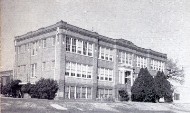
The Alamo-styled Milano School is by design unique to this small town, Joy Graham
of Rockdale said. Mrs. Graham, former Milam County Historical Commission chairman,
who operates a Little Bit of History research facility in Rockdale, believes the
town's ability to stay alive while other train-made villages of its kind faded away
is a tribute to the people who settled in the area.
Milano residents are "unselfish, persevering, God fearing, considerate of others,
honest people," Mrs. Graham said.
Today, freight trains roar through town, and caravans of motor vehicles drive
through en route to other parts of the state. Milano incorporated as a city in the
1970s calling itself Milano, dropping the Junction. Today, there is still a
railroad and highway junction, in addition to a U.S. Post Office, public school
system, livestock sale barn, convenience store, truck stop, barbecue restaurant,
flea market and several other businesses operating in Milano selling farm and ranch
supplies and fencing. The town is headquarters of the Post Oak Savannah Groundwater
District serving Milam and Burleson counties.
In a venture to preserve a piece of Milano history, the city council is striving to
restore the First State Bank building donated by Marjorie Bailey. Now called the
Bailey Bank Building that once housed a store and U.S. Post Office.
"As a visitor to the small town, it might appear to be a 'sleepy little town'" but
the "quality of life" is not as complicated as it is in large cities, Mrs. Graham
said.
.
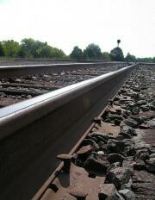
Milano was established twice when two railroad companies came through Milam County. Shirley Williams/Telegram